The Minimalist Kitchen: Space-Saving Ideas for an Efficient Cooking Environment

Rethinking the American Kitchen: Less Clutter, More Function
Across the United States, kitchens are shrinking while grocery bills and gadget collections keep growing. A minimalist kitchen offers a practical answer to this squeeze, trading excess for intention. By focusing on essential design elements, homeowners can create spaces that not only look good but also function efficiently.
This isn’t just an aesthetic trend borrowed from Scandinavian design magazines. It’s a functional shift toward space-saving kitchen ideas that make everyday cooking faster and less stressful. Minimalism in the kitchen promotes a philosophy centered around functionality, simplicity, and style, allowing users to focus on their culinary endeavors without the distraction of clutter.
Why Small Kitchens Are Driving Big Design Changes
According to the National Association of Home Builders, the average American kitchen has decreased in size over the past decade, especially in urban apartments and starter homes. This tightening of space poses unique challenges but also prompts innovative solutions. Homeowners are responding by rethinking layout, storage, and tools to maximize efficiency.
An efficient cooking environment depends on a few key principles:
- Prioritizing multi-use tools over single-purpose gadgets, such as using a food processor for chopping, blending, and kneading rather than cluttering the counter with separate tools.
- Maximizing vertical storage instead of counter space; for instance, wall-mounted shelves can hold spices and cookbooks, freeing up counter space for food prep.
- Keeping surfaces clear for actual food preparation, which can enhance focus while cooking, leading to better meal outcomes.
- Choosing quality over quantity in cookware and appliances, as investing in a few high-quality items can significantly improve the cooking experience.
These strategies aren’t about deprivation. They’re about designing a kitchen that works harder with less. Implementing these changes not only leads to a more organized kitchen but also reduces stress and improves the cooking experience.
What This Article Covers
This guide breaks down practical minimalist kitchen organization techniques anyone can apply, regardless of square footage. From small kitchen design hacks to specific kitchen decluttering tips, every section focuses on real, actionable changes that can lead to a more pleasant cooking environment.
Expect concrete examples: smart drawer dividers that keep utensils in order, hidden appliance garages that seamlessly blend your gadgets into the cabinetry, and pantry systems that streamline access to frequently used ingredients, cutting prep time significantly. The goal is simple—a kitchen that feels calmer and performs better every single day, allowing America’s home cooks to enjoy the art of cooking without the burdens of mess or disarray.
DISCOVER MORE: Click here to uncover minimalist kitchen ideas
Smart Layouts: The Foundation of Space-Saving Kitchen Ideas
Before buying a single organizer bin or drawer divider, the layout itself deserves scrutiny. A minimalist kitchen starts with how the space is arranged, not just what fills it. The classic “kitchen work triangle”—connecting the sink, stove, and refrigerator—still matters, but modern small kitchen design often reworks this concept into a linear or L-shaped flow that suits tighter footprints common in condos across cities like Chicago, Austin, and San Francisco.
Builders and designers increasingly favor galley-style layouts for compact homes because they reduce wasted steps and eliminate awkward dead space. According to Houzz’s 2023 Kitchen Trends Study, nearly 40% of homeowners renovating small kitchens prioritized layout efficiency over adding square footage. That statistic alone signals a shift: Americans aren’t necessarily seeking bigger kitchens, but smarter ones.
Zoning: Assigning Purpose to Every Inch
One overlooked strategy is zoning, a technique borrowed from commercial kitchen design. Rather than treating the kitchen as one large multipurpose area, each section gets a defined role. This approach supports minimalist kitchen organization by ensuring tools and ingredients live exactly where they’re used, cutting down on unnecessary movement and mental clutter.
A functional zoning setup typically includes:
- A prep zone near the counter with cutting boards, knives, and mixing bowls stored within arm’s reach.
- A cooking zone surrounding the stove, holding spatulas, oils, and frequently used spices.
- A cleaning zone near the sink, housing dish soap, sponges, and a compact drying rack.
- A storage zone, often vertical, dedicated to pantry staples and bulk items bought at warehouse stores like Costco.
This kind of intentional separation doesn’t require a full renovation. Even renters can apply zoning principles using portable carts, tension-mounted shelves, or drawer inserts that snap into existing cabinetry without tools.
Vertical Space: The Most Underused Real Estate
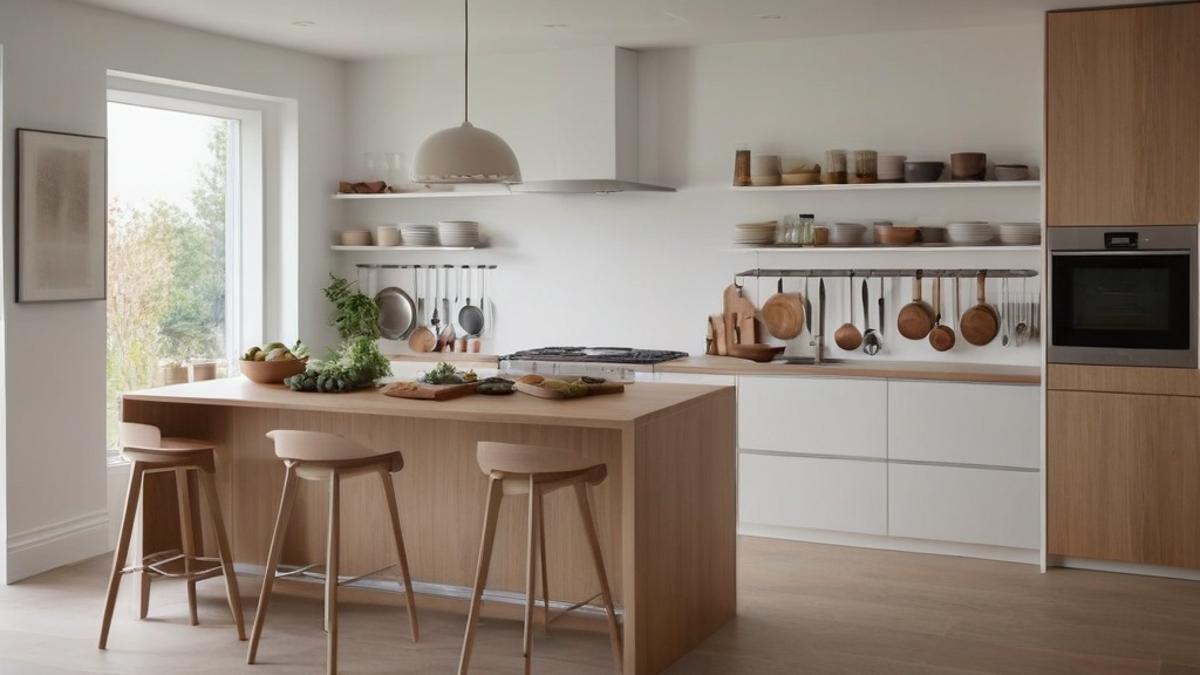
Floor space is finite, but walls rarely get used to their full potential. Installing shelving from countertop to ceiling can add significant storage without expanding the room’s footprint. Magnetic knife strips, hanging pot racks, and pegboards—popularized in professional kitchens—are now common features in efficiency-focused American homes.
This vertical shift matters more than it seems. The National Kitchen and Bath Association reports that kitchens under 150 square feet benefit most from vertical storage solutions, often gaining the equivalent of an extra cabinet’s worth of space simply by using wall-mounted systems. For anyone following kitchen decluttering tips, this represents one of the highest-impact, lowest-cost changes available.
Together, thoughtful layouts and vertical strategies lay the groundwork for a truly efficient cooking environment—one where every inch serves a purpose instead of collecting clutter.
| Category | Key Features |
|---|---|
| Vertically Stacked Storage | Efficiently utilizes walls for jars, pots, and pans through open shelving or pegboards, reducing counter clutter. |
| Multi-functional Furniture | Incorporates pieces like kitchen islands that double as prep areas or dining tables, maximizing space. |
| Decluttering Techniques | Focuses on minimalism by promoting the use of only essential utensils and appliances, leading to smoother workflows. |
| Smart Appliances | Integrates technology with compact, multi-function appliances, streamlining cooking processes and saving energy. |
DISCOVER MORE: Click here to dive into minimalist kitchen ideas
Multifunctional Tools and the Art of Owning Less
Once the layout and vertical space are optimized, the next layer of a minimalist kitchen involves rethinking what actually belongs inside it. Space-saving isn’t only about clever storage—it’s about owning fewer, better things. American kitchens have long been criticized for accumulating single-use gadgets, from avocado slicers to egg separators, that spend 99% of their life in a drawer.
A 2022 survey from Statista found that the average U.S. household owns more than 30 kitchen gadgets, yet regularly uses fewer than ten. That gap represents wasted cabinet space and, often, wasted money. Adopting space-saving kitchen ideas means asking a simple question before every purchase: does this tool serve more than one purpose?
Choosing Equipment That Earns Its Space
Multifunctional appliances have become the backbone of efficient small kitchens nationwide. Instant Pots, for instance, replace slow cookers, rice cookers, and steamers in a single unit—explaining why the brand sold over 100 million units worldwide since its 2010 launch. Similarly, cast iron skillets can move from stovetop to oven to table, eliminating the need for multiple specialized pans.
Consider these swaps commonly recommended by professional organizers:
- A single sharp chef’s knife instead of a twelve-piece knife block.
- Nesting mixing bowls instead of bulky, mismatched sets.
- A collapsible colander that folds flat for storage.
- Stackable cookware with interchangeable lids.
Each of these choices supports minimalist kitchen organization without sacrificing functionality—cooking enthusiasts don’t need to give up capability, just redundancy.
The Psychology Behind Fewer Possessions
There’s also a cognitive component worth mentioning. Research from Princeton University’s Neuroscience Institute found that visual clutter competes for attention and can reduce focus and increase stress. In kitchen terms, this means a countertop crowded with appliances doesn’t just limit workspace—it can make cooking feel more chaotic than it needs to be.
This is where practical kitchen decluttering tips intersect with everyday well-being. Clearing counters of rarely used items, donating duplicate tools, and storing appliances used less than once a month can transform the emotional experience of cooking, not just the physical space.
Ultimately, curating fewer, more versatile tools builds toward a genuinely efficient cooking environment, where function takes priority over accumulation, and every item in the kitchen has a clear, active role.
Rethinking Space as a Long-Term Investment
Across every layer of this discussion—layout, vertical storage, and multifunctional tools—one theme keeps surfacing: a minimalist kitchen isn’t a design trend that happens overnight. It’s an ongoing practice of asking whether each object, appliance, and inch of counter space is truly earning its place.
The National Kitchen and Bath Association reports that kitchen remodels remain among the most expensive home projects in the U.S., often exceeding $25,000 for mid-range updates. Not every household can afford a full renovation, but the principles behind space-saving kitchen ideas cost nothing to adopt. Clearing a single cluttered drawer or reorganizing cabinets by frequency of use can produce noticeable results without touching a contractor’s budget.
Small Changes, Measurable Impact
What makes this approach compelling is its scalability. Someone in a 400-square-foot city apartment and someone in a suburban house with a spacious kitchen can both apply the same minimalist kitchen organization logic—maximize vertical storage, eliminate redundant tools, and prioritize multifunctional equipment. The scale differs, but the underlying strategy remains identical.
It’s also worth remembering that small kitchen design isn’t inherently limiting. Constraints often force smarter decisions, whether that means a fold-down table or a single high-quality knife replacing an entire block. Limited square footage can become a catalyst for intentionality rather than a design obstacle.
Looking ahead, as more Americans embrace smaller living spaces and rising real estate costs push households toward efficiency, the demand for practical kitchen decluttering tips will likely keep growing. Building a genuinely efficient cooking environment isn’t about following a rigid aesthetic—it’s about creating a kitchen that works quietly, efficiently, and without excess, meal after meal.
Frequently Asked Questions
What are some essential tools to include in a minimalist kitchen?
In a minimalist kitchen, focus on versatile tools that can handle multiple tasks. Essentials include a high-quality chef’s knife, a cutting board, a few pots and pans of varying sizes, and measuring cups. Consider multifunctional appliances like a blender or food processor that can help reduce clutter.
How can I maximize storage in a small minimalist kitchen?
To maximize storage in a small minimalist kitchen, use vertical space by installing shelves or hanging pot racks. Additionally, utilize under-cabinet storage solutions or drawer organizers to keep items neatly arranged. Opt for stackable containers to store dry goods efficiently.
What are some design tips for achieving a minimalist kitchen look?
To achieve a minimalist kitchen look, aim for a clean and uncluttered aesthetic with a neutral color palette. Choose simple cabinetry and limit decorative items to a few essential pieces. Use open shelving sparingly to display only your most-used or visually appealing items.
How can I maintain a minimalist kitchen over time?
To maintain a minimalist kitchen, regularly assess your items and remove anything that you no longer use or need. Create a habit of organizing after each cooking session to prevent clutter from accumulating. Additionally, set a rule for one in, one out when purchasing new kitchen items to keep your space streamlined.

Beatriz
Beatriz Johnson is a seasoned minimalist and writer with a passion for simplifying the complexities of personal organization and intentional living. With over a decade of experience in decluttering strategies and mindful consumption, she specializes in topics like space optimization, habit simplification, and sustainable lifestyle choices. Through her work on our website, Beatriz empowers readers to embrace minimalism, reduce mental and physical clutter, and create more meaningful, organized lives in today's fast-paced world.